
Erotic comics from Japan and the West: two cultures, two imaginations
Between Japanese erotic comics and their Western equivalent, cultural differences are not only about the drawing: these are two publishing systems, two relationships to the body, two types of readers. In Japan, the land of woodblock prints, drawn eroticism circulates in thick magazines, several hundred pages long, driven by publishers like Mujin or Fujimi Comics, with this golden rule: each theme has its own magazine.
The thematic classification is, in fact, the first shock for a European reader. Where one expects an author and their universe, one finds titles organized like supermarket aisles, with a clear preference for nymphets entangled with older males. These magazines are capable of all sorts of boldness: tortures, mutilations, multiple perversions coexist without anyone being disturbed.
The West, on the other hand, has built its eroticism around the character and the album. Barbarella published by Éric Losfeld in 1964, the Italian pockets that flooded French newsstands in the seventies, Pichard, Crepax, Manara translated by Albin Michel or Glénat: one buys a name, a heroine, a printed object that one keeps. Japan, however, produces magazines that are consumed and discarded.
Erotic manga facing censorship: sex and pubic hair banned until the 1990s
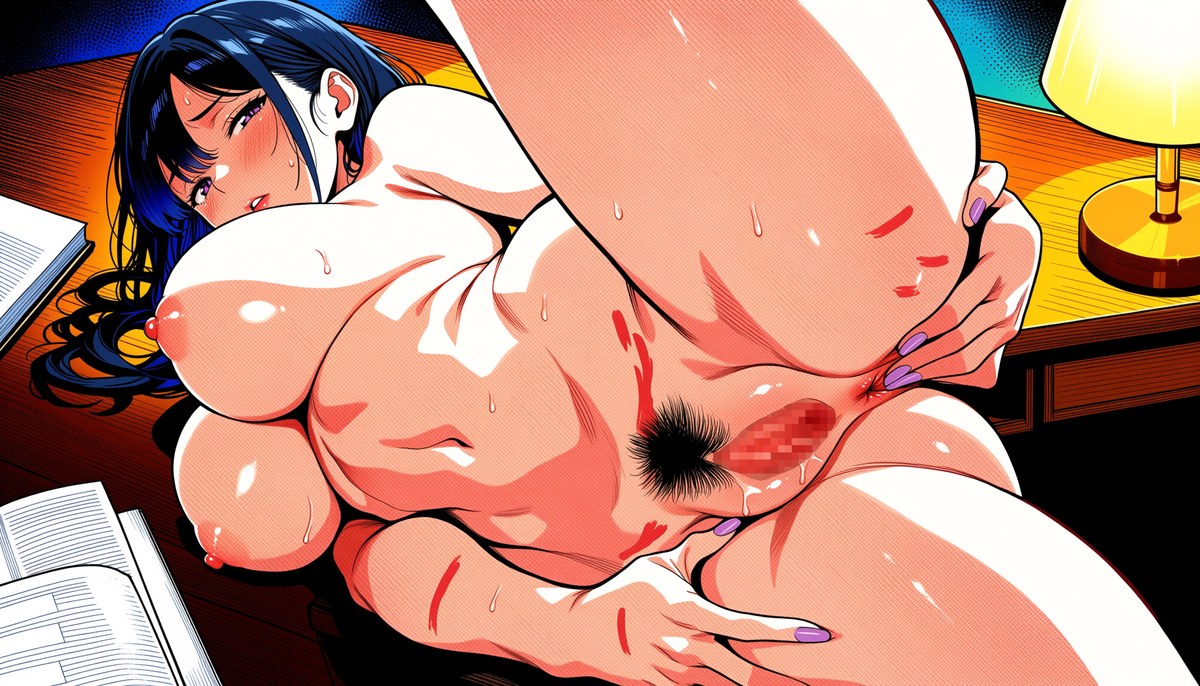
If male genitals are censored in mangas, it is not the scene that poses a problem, it is the anatomy. In Japanese erotic comics, the representation of male genitals and pubic hair remained prohibited until the end of the nineties, even as magazines published without hindrance sequences of torture, mutilation, and all kinds of perversions.
Let's summarize the paradox, because it is dizzying: one can tell everything, one cannot show everything. A page of Japanese erotic manga passes the filter if the anatomical detail disappears, erased, covered up. The content of the story, however, is not judged.
An amusing consequence for us: the European reader long had the privilege of discovering the original work of the author, as it was drawn, before the genitals were erased for the Japanese edition. In other words, the French version of an erotic manga could be more faithful to the original style than the one sold in the archipelago.
Japanese showcases without taboo: Western modesty put to the test
In Japan, erotic mangas are sold without any censorship difficulties: sexy covers adorn the windows of newsstands, displayed at eye level, among everything else. The object is not hidden, it is in the storefront.
In France, the situation is exactly the opposite, and has been for a long time. Erotic comics are hidden away in bookstores, rejected by large retailers, absent from sales points in train stations. For several years now, the entire chain that publishes a work is responsible for the censorship issues it may encounter, which explains the timidity of sellers: no one wants to risk their position in case of condemnation.
The French system is based on three levels of prohibition inherited from the law of July 16, 1949: level 1 prohibits sales to minors, level 2 adds the prohibition of display, level 3 also prohibits advertising and delivers the commercial blow. Manga is not exempt from this: Video Girl Aï, published by Tonkam, was banned from sale in 1996. We are far from the Japanese storefront.
Teen mangas and Western X-rated series: who is bolder?
Japanese erotic comics, aimed at adolescent readers, are often as bold as our own X-rated series. The statement may seem exaggerated, but it is not: Japan offers erotic manga explicitly targeted at teenagers, with a level of audacity comparable to that of publications reserved for informed adults here.
On the Western side, this type of content belongs to a strictly separate circuit. Erotic pocket books flooded French kiosks in the 1970s - Elvifrance published around twenty monthly titles in 1978 alone - but they were classified as X, monitored, and regularly banned. A French teenager in the 1970s would not find this in their usual weekly magazine.
This discrepancy says something about the respective values: Japan draws the line on the representation of sex (anatomy), while the West draws it on the audience (reader's age, access to the point of sale). Two morals, two places where the barrier is set.
The masters of erotic manga: Inui, U-Jin, Watanabe and others
Among the most cited erotic manga artists are Haruka Inui, U-Jin, Yoshimasa Watanabe, Hiroyuki Utatane, and Yutaka Tanaka. They are just a handful of names among dozens of authors who contribute to a production of great graphic richness, far superior to the B-movie reputation it is sometimes given in Europe.
One career summarizes the field well: that of Katsu Aki, born in 1961, who began in 1983 in Hana to Yume, a bi-monthly dedicated to shojo manga, after winning the twelfth competition for young talents from Shogakukan. From the start, he leaned towards the hentaï genre, eroticism, before achieving success with more fantastical series and then returning to eroticism, which would make him known worldwide.
This back-and-forth is typical of the archipelago: one moves from manga for teenage girls to hentaï, from heroic fantasy series to intimate narratives, without the career suffering. In France, many erotic authors have conversely worked under pseudonyms to avoid alienating a morally concerned readership - Arcor for Angelo Di Marco, Ardem for Alain Mounier. Two ways to embrace, or not, one's name.
Japanese erotic comics in France: limited distribution but faithful to the original
Several French publishers have attempted to translate Japanese erotic mangas - Samouraï, Albin Michel, Le Téméraire, Bédé X - but their distribution has remained limited. These typically Japanese products have never found the mass readership here that they had in the archipelago.
The already mentioned paradox actually works in favor of the French reader: by purchasing these translations, they discover the original work of the author, before the censorship of the genitals imposed by Japanese publishing. A foreign edition that is more complete than the national edition is rare enough to be noted.
Other more artisanal bridges have existed. Frédéric Boilet, who has been living in Japan since the mid-nineties after receiving a creation grant from the publisher Kodansha, directed a collection of erotic mangas for Les Humanoïdes Associés, while linking the Angoulême image school and the Sôgo school of Osaka. Elsewhere in Europe, the appetite was more pronounced: Spain has long filled its erotic magazines with material from abroad, and more particularly from Japan.
Ogenki Clinic, Step Up Love Story: the manga that teaches sexuality
Ogenki Clinic is part of those Japanese series that arrived in France through the back door: Jean-Michel Berté, with Geisha Éditions, published it alongside French and foreign titles, in magazines like Yoko, Geisha starting in 1998 and then Paméla in 1999. The erotic manga shares space with Varenne, Baldazzini, or Cuneo, an improbable yet very telling mix of the market at the time.
But the real Japanese educational bestseller is called Futari ecchi, translated in France under the title Step up love story. Launched in 1997 by Hakusensha, published since the beginning in Young Animal, it has 48 volumes released and has sold over 16 million copies in the archipelago. Its French publisher, Pika, presents it in the Senpaï collection more as a learning manual than as yet another erotic manga.
The content confirms the promise. The series follows a young married couple, Makoto, a premature ejaculator at first, and Yura, very measured about the matter, who learn together: the various forms of penises and nipples, the proper use of fingers, how to strengthen the pelvic muscles. Everything is expressed clearly, sometimes in the form of instructional tables, and the sequences breathe more of innocent love than brutality. This is probably the secret to its success.
French and Japanese sexuality: what French publishing reveals
The French edition of Step up love story had an idea that French sexuality statistics make delightful: to complement the informative data on Japanese sexuality with elements from our own culture. Among other things, we learn that 10% of French women have never experienced orgasm.
This detail is not trivial, it sheds light on the entire subject. A didactic Japanese manga crosses the sea, and the French publisher deems it necessary to attach a local notes apparatus, because the sexuality described in the series - practices, vocabulary, marital expectations - does not exactly match that of the hexagonal reader.
Nota Bene: this is a fundamental cultural difference between Japanese erotic manga and Western erotic comics. The former willingly assumes a pedagogical function, with tables, anatomical explanations, and practical advice. The latter, on the other hand, long remained on the side of pure fantasy - even though the trend is reversing, as practical sexuality guides have eventually been adapted into comic books in 2011, with albums like Osez le Kama Sutra illustrated by Eve E, Aya, and Karo.
The American underground comix: sex, drugs, and social protest
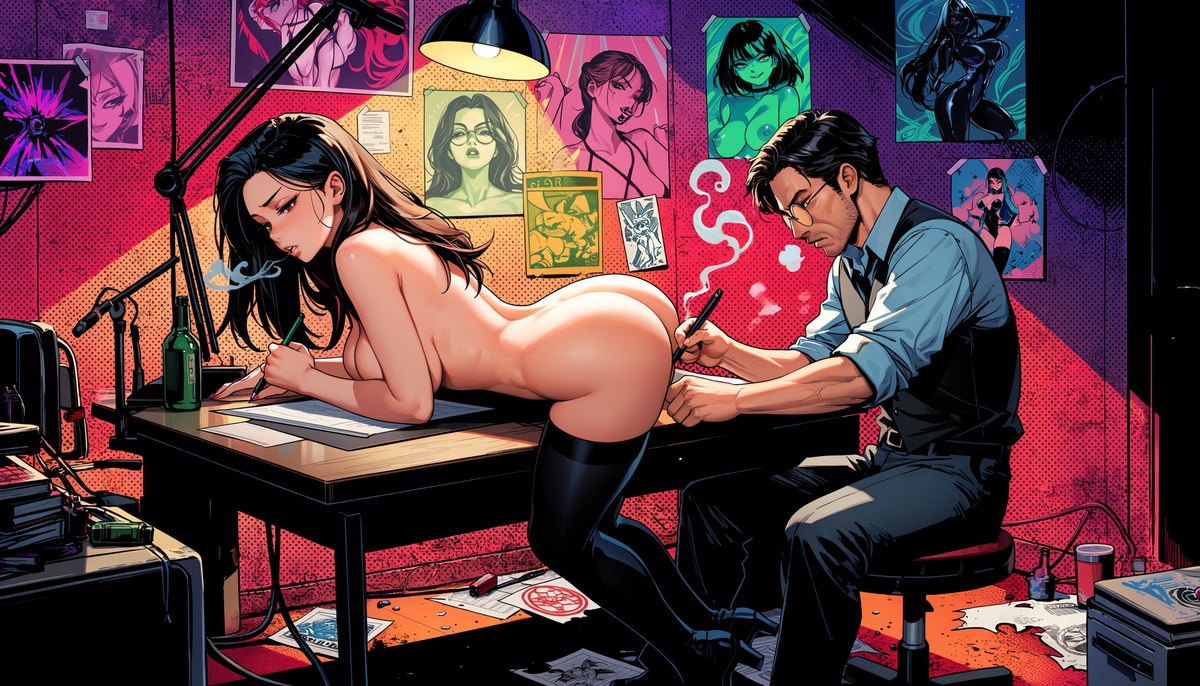
American underground comix emerged on the West Coast in the 1960s, when a group of young creators decided to confront the Comics Code Authority, which was responsible for protecting youth. Their comix talk about drugs, sex, anti-militarism and freedom, and they completely abandon classic superheroes.
It is important to recall what they are standing against. In October 1954, Congress established this famous code under the pressure of psychiatrist Fredric Wertham, author of Seduction of the Innocent, a book in which he criticizes comic book heroes, violence, and sex. The effect on American comics is comparable to that of the 1949 law in France: some publishers abandon comics, while others comply with the code's requirements, which is still in effect.
Hundreds of underground titles are created, allowing a whole generation of authors to emerge, including Crumb, Shelton, and Spain Rodriguez. Here, sex is not a store aisle like in Japan: it is a political weapon, a way to say no to a conservative America. The difference in values with Japanese eroticism, which is industrial and thematized, is striking.
Has American underground comics influenced French comics?
The influence of American underground on French comics is real but limited: Crumb, Shelton and Spain Rodriguez make their entrance in France in the magazine Actuel, where they become regular guests of the first formula, yet the penetration of American underground comics remains marginal in the Hexagon.
The spirit, however, passes. The revolt of Gotlib, Mandryka and Bretécher in L'Écho des Savanes pushes many authors to express themselves without limits in previously very tame magazines, and Pilote, Circus, Charlie Mensuel, (À Suivre), Fluide Glacial, Métal Hurlant smash taboos one after the other. Some illustrators come directly from the protest press after May 68: Philippe Bertrand publishes his first drawings in L'Idiot International in 1971, then in Zinc, Politique Hebdo or La Gueule Ouverte.
A counterpoint is necessary, and it is important. In the French market of the seventies, it is not America that dominates but Italy: Elvifrance offers the best of transalpine production, French creations remain rare, and Spain will follow with El Vibora, a monthly that talks about drugs, marginality and sex while refusing any form of censorship. US underground served as an example, not an economic model.
Aesthetics and values: what the cultural comparison really reveals
The Japanese erotic comic book is it really more liberated than the Western one despite its censorship? Yes and no, and that is the whole interest of the comparison. Japan allows window displays, magazines of several hundred pages, erotic mangas for teenagers like Beat, the most extreme themes - but prohibited until the end of the nineties from drawing male genitalia or body hair.
The West does the opposite. It shows anatomy openly, publishes Pichard, Manara, Crepax or Serpieri, but hides the albums under the counter, refuses them in supermarkets, and maintains a three-tiered ban inherited from 1949 - Elvifrance has collected 747 prohibition orders, including 36 of level 3, in twenty-two years of existence. The freedom of expression comes with a constraint of distribution.
What the comparison reveals, therefore, is not one camp bolder than the other, it is the place where each culture places its taboo:
- in Japan, censorship concerns the representation of the body, not the content of the stories or the age of the reader,
- in the West, it concerns access to the object: sales to minors, display, advertising.
To realize this for oneself, the simplest way is to compare two editions side by side: a Japanese series translated into France, where the original line has not been erased, and a European erotic album from the same period. You will quickly see which of the two has been altered, and why. It is there, in these alterations, that the values of each culture are read much better than in any discourse.