
Before 1962: erotic drawing under close scrutiny
To measure Barbarella's audacity, one must consider the climate that preceded her. Just after the war, a simple comic like Lulu, the pin-up secretary was enough to trigger legal action. The court ruled in December 1948, and not just the publisher: the printer was also convicted. The charge? Outrage to public decency.
The severity did not wane in the following years. In the middle of the decade, the same misadventure struck the couple who ran Grands Romans noirs dessinés: suspended prison sentences for both, along with a fine on top of that.
On the other side of the Atlantic, the Kefauver Commission investigated juvenile delinquency. In the wake of this, in 1954, the American industry imposed its own safeguards: this was the Comics Code. The Tijuana bibles remained, thin underground booklets sold in secret, whose heyday dated back to before the war and which were dying out in the early sixties.
(The authorities took a long time to admit that an album could mention sex, even indirectly. It wasn't until the autumn of 1972 and the second issue of L'Écho des Savanes that Gotlib depicted sexuality openly.)
Jean-Claude Forest, from La Semaine de Suzette to adult magazines
The man who will shake all this up is named Jean-Claude Forest. He was born in 1930 in Perreux-sur-Seine and signed his first pages at nineteen. It is Élan publishing house that gives him his start. Drawing and writing: he will manage both simultaneously.
His years of apprenticeship take place in children's press, from Vaillant to La Semaine de Suzette. Quite early on, however, he tries his luck with older readers, first in Voilà, then in V Magazine. A summer special issue of the latter features his version of Zodiaque in 1952, undoubtedly his first foray into eroticism.
1962: an almost invisible serial in V Magazine
The title that welcomes Barbarella in 1962 is unassuming. This quarterly magazine, a bit of a mixed bag, combines jokes, photos, and risqué stories. Forest includes, between two sections, an 8-page serial printed in bichrome (a printing limited to two colors).
A surprising detail is that the episodic release goes almost unnoticed. It will take the album, two years later, for the heroine to become a phenomenon... and a problem for the authorities.
Barbarella, a heroine who chooses
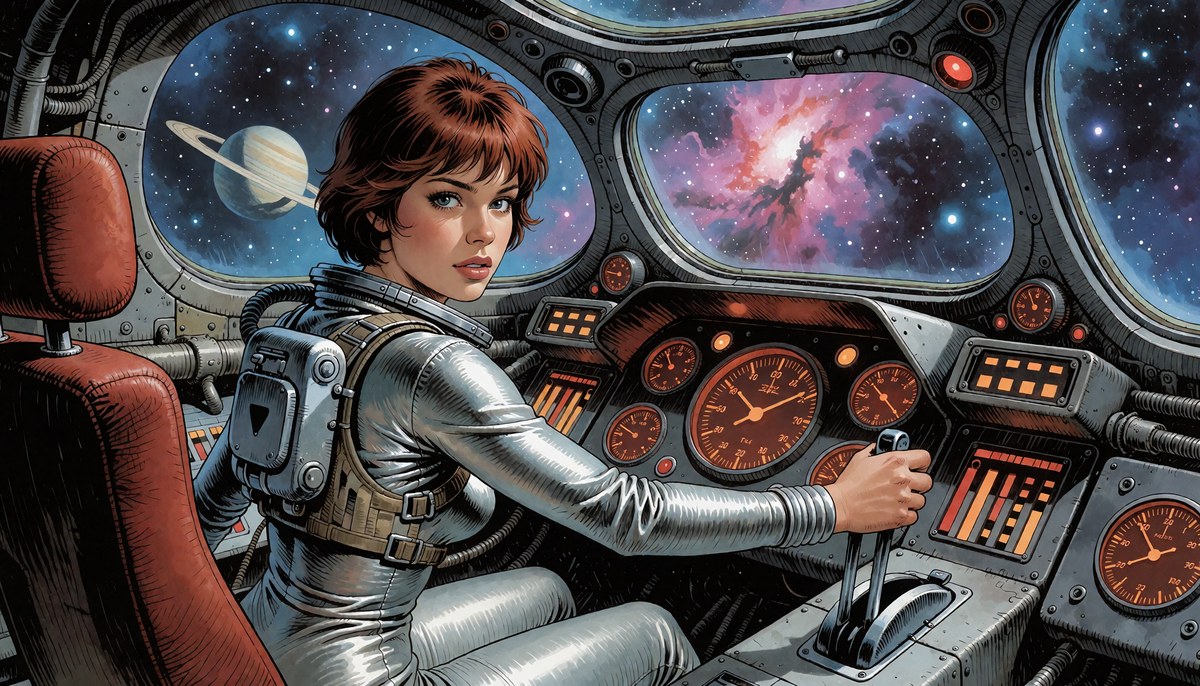
What strikes you first is the character herself. Barbarella lives her life as she sees fit, loves love, and does not hide it from the reader. In early 1960s French comics, the break is clear: she is the one who decides.
Her home planet is called Lythion, but the essence takes place elsewhere, during stops on unknown worlds where each encounter can lead to alliance or confrontation. In matters of the heart, it is an angel, Pygar, who seduces her. In terms of friendships, she can count on Lio the brunette and Narvar. With Bic and Timec, she even sets up a circus.
In our eyes, this is where science fiction becomes a laboratory. On a distant planet, the author can show what realistic storytelling has not yet dared to address.
1964: Éric Losfeld and the first album for adults
The album's gamble belongs to Éric Losfeld, a publisher who knows the backroads. By the late fifties, he was already secretly distributing illustrated novels. Their illustrations mimic comic book pages, without having the mechanics: nothing truly connects one image to the next. Sophie or the Beautiful Holidays gives an idea of this.
In 1964, he compiles Barbarella into an album and simultaneously invents a new object: the first comic book designed solely for adults. Everything signals this: a price that automatically excludes teenagers, and a cover that bears no resemblance to the albums offered to children.
The authorities' response is swift: a ban, on the grounds that comics are children's reading. Newspapers seize on the affair and thrust the heroine into the spotlight, even though the sales do not really follow. Some critics hail her as the first great paper heroine of modern comics. Today's reader may smile at her wisdom, but in her time, she truly shocked.
From paperback to the big screen: the second life of Barbarella
The character quickly makes her way. It is Barbarella who opens the doors of comic books to Livre de Poche, as no drawn character had entered before her.
Cinema takes over in 1968. Behind the camera, Roger Vadim, and in front, Jane Fonda. The film draws its plot from the first album.
On paper, V Magazine publishes two more long adventures. The next one, however, does not go through the magazine: Pierre Horay releases it directly in album form. If you are hunting for reissues, note two milestones: Dargaud in the heart of the 1980s, then Humanoïdes Associés in 1994, with a partial edition that requires checking the exact content of a volume before purchasing it.
Losfeld, the publisher of the boldness of the sixties
The ban does not deter Losfeld, who reoffends with other authors. In his catalog, we find Peellaert and his Jodelle, which we will discuss further below. The Saga of Xam bears the signature of Nicolas Devil. As for Druillet, this is where his Lone Sloane finds a publisher.
Georges Pichard is also part of the adventure: his Gorême first appeared in Le Rire, in 1966. At Losfeld, the story changes its name and becomes Lolly Strip.
The end is less glorious, as the company goes bankrupt. Alex and Daniel Varenne were then preparing a project there. Their Chronicle of the Gil Mar never found its way to bookstores.
Jodelle and Pravda: Guy Peellaert brings pop art into the box
Born in 1934 in Brussels, Guy Peellaert only approached comics in 1966, after years in advertising. Losfeld immediately published his Jodelle. In the script, Pierre Bartier enjoys turning everything into ridicule, and pop art makes its first appearance in the panels, with a tone that does not seek to please children.
The album breathes the yé-yé France of General de Gaulle. Jodelle borrows her face from Sylvie Vartan, but swaps the singer's blonde hair for a red mane. A spy by profession, she relies on her power of seduction to achieve her goals, in a black bikini, amidst ancient settings reimagined in contemporary style. As the pages turn, she encounters the celebrities of the moment, from the Beatles to François Mauriac, passing through Dick Rivers.
Graphically, the album turns its back on the Franco-Belgian school: the colors scream, the panels jostle, and one can feel the eye of the advertiser everywhere. Peellaert would only return to this genre once, with Pravda la survireuse (Pravda the Survivor): Françoise Hardy lends him her face. Brunette, she is seen as Jodelle's twin.
Some specialists consider him a pioneer of erotic comics in France, while noting that Jodelle, adored upon its release, has aged due to its adherence to fashion. A piece of advice: browse it as much as a document on the sixties as a narrative.
Auranella, Barbarella's Italian cousin
The Barbarella model quickly crosses the Alps. In Italy, in 1966, publisher Renato Bianconi launches Auranella at Gemini, a blonde heroine in a swimsuit who travels through space aboard a bird-shaped spaceship. The resemblance is striking, to the point that she is readily presented as a twin sister of Forest's heroine.
Auranella flees her planet, devastated by the black magician Tanaros, then, with the help of Anrar, traverses worlds ruled by tyrants and populated by monsters. The drawing is entrusted to Floriano Bozzi, who has clearly studied Forest's early Barbarella very closely.
Many see it as one of the very first adult comics, even if its eroticism remains very light, far from what Italian comics would dare later. French readers discovered it at SEPFI, until 1968, in 26 issues: if you are looking for the series, it is this format you should watch for.
Richard Corben and Den: adult science fiction with an airbrush
Change of scenery with the American Richard Corben. He trained in animation, then in underground comics and at Warren, the publisher of Creepy and Vampirella. The character he is immediately associated with is named Den. Just for the first episode, it took him five years to develop.
Behind this brief name lies David Ellis Norman, a young man from Kansas. An uncle versed in sorcery sends him to the Land of Nowhere, and the reader along with him. There, one wanders through expanses of rock and sand where tyrants and monsters lurk, but also creatures of striking beauty.
This time, it is a hero, often nude, who carries the narrative. Corben's signature is the airbrush, which gives his drawings a fresh depth. The eroticism is realistic, the women have generous curves, and the story is both fantastical and erotic comics.
French readers discover him in 1975: it is issue 3 of Métal Hurlant that welcomes him. The episodes follow one another until 1982, and Den resurfaces much later in Penthouse Comix. For reading in volumes, turn to the albums published by Toth.
Adult magazines, ruined worlds
Barbarella herself has a final episode in the early 1980s: Forest writes the script and hands the pencil to Daniel Billon. This swan song appears in L'Écho des Savanes.
Other heroes come from space. Slot-Barr, who hails from Argentina under the pen of Ricardo Barreiro and the pencil of Solano López, features a pilot of the galactic confederation turned superman, who encounters space amazons, beautiful creatures, and a vampire queen. Michel Deligne introduces him in France in Spatial as early as 1978.
Alex Varenne, on the other hand, sets Ardeur (Passion), an expansive saga, after a nuclear war. The story begins in 1979 in Charlie Mensuel: L'Écho des Savanes will later take over.
Even Paul Gillon takes the plunge, he who had never signed an erotic comic. It will be La Survivante (The Survivor), the very year Druuna is born. The idea comes from Claude Maggiori.
Serpieri, from western to anticipation
Before Druuna, Paolo Eleuteri Serpieri was primarily a man of images in the broadest sense. Born in Venice in 1944, he trained as a painter. His studies in Rome covered everything from architecture to Fine Arts, and for a time, he even shared his knowledge with high school students as an art teacher.
Comics arrived in 1975, alongside Raffaele Ambrosio, with whom he produced a series of westerns for Italian magazines. He tasted the fantastic in the pages of L'Eternauta. Then he returned to the western genre with Orient Express.
His style is both realistic and baroque. Ironically, in France, his westerns remain in the background, overshadowed by the worldwide success of his beautiful brunette. To go further, our portrait of Paolo Eleuteri Serpieri details his journey.
1985: Druuna is released from Morbus Gravis
It all begins in 1985, in Charlie Mensuel. Serpieri is solely in charge, both of the script and the drawing. The first story bears a Latin name, Morbus Gravis, which announces the illness.
At first, it is a fantastic story driven by a heroine, nothing more. The narrative then continues in Pilote, before being published in albums.
But the character quickly takes over. Brunette, with full curves, her face reminiscent of Valérie Kaprisky, Druuna becomes the center of gravity of the series, which ultimately bears her name and gains in eroticism from album to album. By 2006, there are already about a dozen.
Surrounding her are also collections of illustrations, including Obsession. Parfums de femmes is part of it, along with the two volumes of Druuna X. A note for collectors: Bagheera editions have disappeared, and their albums can only be found second-hand. In the meantime, search the second-hand market, making sure to check the condition of each volume.
The City, a sick world after the catastrophe
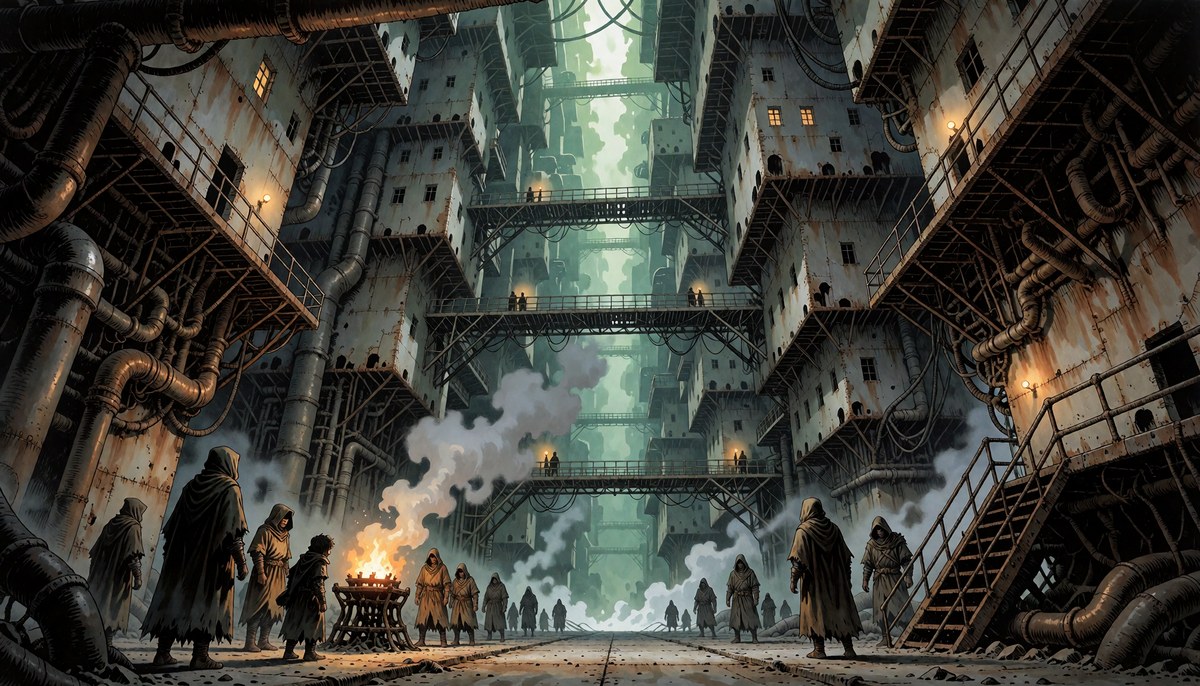
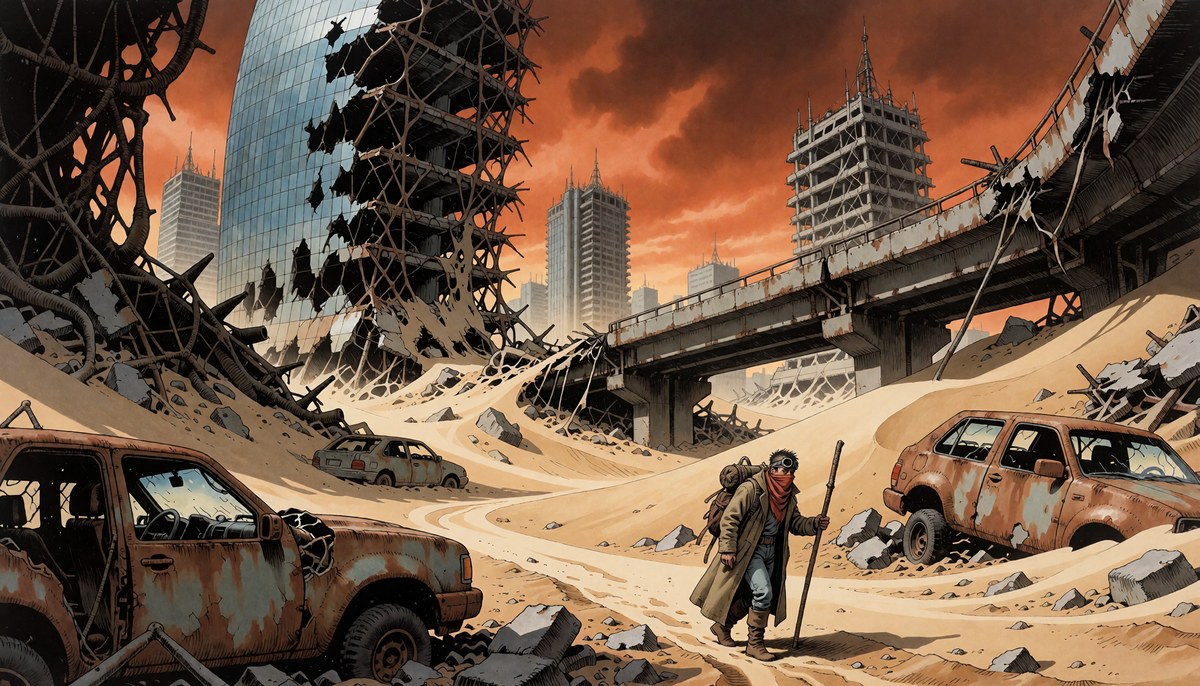
The universe of Druuna is one after the end. From Earth, a final cataclysm has left nothing behind. The action takes place in the Citta, an oversized and exhausted asteroid, where a computer, Deura, serves as the power.
The true enemy is a disease. Slowly, the contagion transforms those who live there into deformed creatures, and our heroine seems to be the only one who remains intact. Her friend Shastar, however, is not spared: the illness metamorphoses him. To obtain the antidote serum, the heroine must submit to traffickers.
Finally, there is Lewis, the very first master of the place, with whom she communicates telepathically. As you read, compare the way Serpieri draws the bodies that have remained intact and the flesh that the disease has distorted.
What Druuna inherits, what she changes
In comparison to her predecessors, Druuna appears both as a synthesis and as a turning point. Here is what she inherits:
- From Barbarella, the autonomous heroine who embraces her desire.
- From Jodelle, the idea that a character embodies the fashion and decor imposed by her time.
- From Auranella and Slot-Barr, a world of space and monsters.
- From Den and Corben, an eroticism conveyed through drawing and adult magazines.
And here is what changes. Barbarella, Jodelle, or Auranella experienced light-hearted adventures, with discreet eroticism, even though Barbarella caused a scandal upon its release. Druuna, on the other hand, evolves in a post-catastrophe world where the body is threatened by disease, and her series shifts towards explicit eroticism. Where Auranella, Slot-Barr, or, later, the parodic X-Women of Fonteriz remain series characters, Druuna transcends the narrative that brought her to life.
Between the ban of 1964 and Druuna's arrival in 1985, the landscape has changed completely: adult comics now have their magazines, and censorship has gradually loosened. To feel this evolution, read in order Barbarella, Jodelle, an episode of Den, then Morbus Gravis and a later album from the series: you will see, in our view, science fiction gradually paving the way for comics that embrace being written for adults.